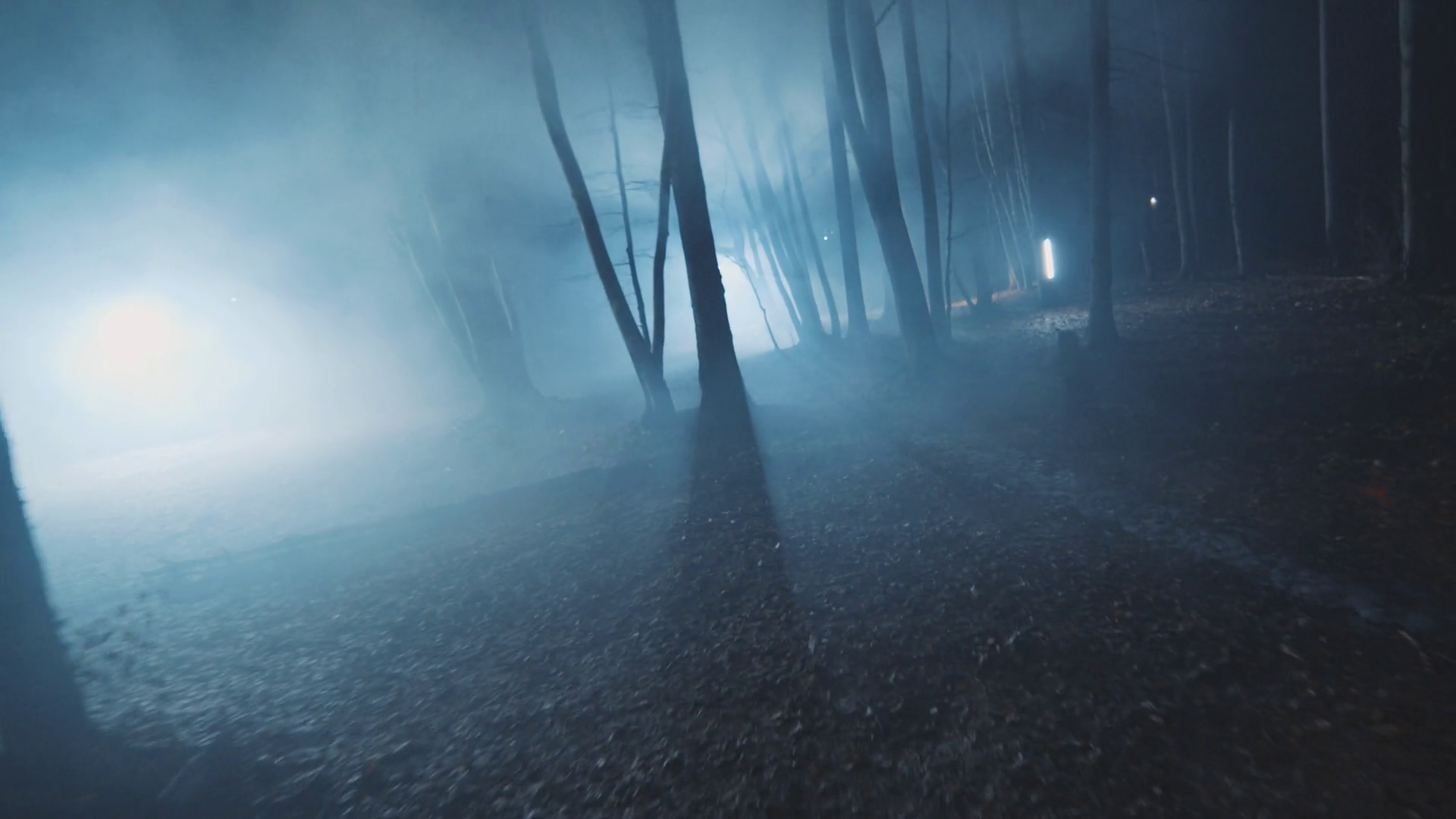
The Church is in a time of uncertainty. The world is changing rapidly around us. Often too rapidly—too abruptly. Christianity no longer has the cultural cachet that it once seemed to enjoy. And at the local level, every diocese is having to discern how to walk through the world as Christ’s Body—how to effectively proclaim a Gospel of transformation (often inconvenient and challenging transformation) to a society that is quite content to continue on the path of division and violence that it has followed for years. Every parish, including St. Paul’s, is having to discern how to better walk together in the light of the Lord in a season when much of what we have done—much of the way we have walked this path so far—as a society and as the Church—is proving unsustainable in the years to come.
In our Compass classes on Wednesday Nights, we’ve been talking about the Christian faith—the shared life of the Body of Christ—as walking a pilgrimage together towards a common goal. But right now it feels like we’re walking that pilgrimage path in the dark. The future feels murky… unsettled… And we react to that murkiness—that uncertainty—in a whole range of extremely understandable, utterly human ways.
Some of us lose heart and stay right where we are, living as we’re used to—unsure if the destination is worth facing the murkiness of uncertain change. Some of us press forward but jump at the shadows—letting anxiety become our guide, looking with suspicion at our fellow pilgrims, and jumping at bogeymen that we’re sure are lying in wait around the next corner. Others grasp desperately for some kind of map—trying to engineer outcomes or to know and control a future that fundamentally cannot be known or controlled.
To be clear: these responses aren’t pathological in and of themselves. They are characteristic of our human condition—informed by the experiences each of us has had. In many ways, they are ‘reasonable’ responses to the uncertainty of walking in a murky in-between—to not knowing, not seeing, not being in charge of what lies ahead on our pilgrimage path. But they’re not the responses we’re called to as Christians.
The earliest believers who wrote the Scriptures we just heard read walked in the darkness of the in-between, too. They, too, lived in a rapidly changing world that was all too often hostile to them. And they believed Jesus’ promise to return and make all things new, leading his holy pilgrim people into his kingdom. But they did not have a certain timeline for his return or a clear blueprint for his kingdom. And they responded to that murky uncertainty in much the same way we do.
Some gave up on the journey and fell asleep, abandoning the distinctive life of the Church and sticking with the way they were used to living. Some jumped to follow false messiahs who claimed to have answers, turning on their siblings in Christ who disagreed with them. Some tried to calculate the day and the hour when Christ would return to establish his kingdom as though humans could read the mind of God. Others tried to build the kingdom themselves, asserting their will or allying with power to fashion the future they wanted for themselves.
The details looked different for them because they lived in a different time and place. But their responses to walking the pilgrimage path in darkness are just as deeply human as ours, motivated by the same fundamental impulses. And it’s those deeply human responses that Matthew and Paul and Isaiah are addressing in our readings.
These readings are startling and weird and have fueled wild speculations about raptures. But the Church gives us these readings at the beginning of Advent not to frighten or bewilder us, but to reframe the murky uncertainty. The season of Advent teaches us how to face the darkness as we walk through the world as the Body of Christ.
In the Gospel, Matthew shows us how Jesus urges us to set down the burden of needing to know when we’ll arrive at our destination. “About that day and hour no one knows, neither the angels of heaven, nor the Son, but only the Father. This is a hyperbolic statement typical of ancient rhetoric, but it gives us permission not to be consumed by speculation. Paul gently urges us not to complacently live as we used to. He’s waking us gently into a new way of living—calling us to lay aside the works of darkness and put on the armour of light. And Isaiah paints a picture of God’s kingdom that doesn’t lay out a blueprint for us to construct, but fixes our gaze on God’s promise and the path immediately set before us, calling us to walk in the light of the Lord.
The message of these readings is not “Keep going as you have been.” But nor is it “Speculate harder,” Be anxious in the night,” or “Be the architects of your own fate.” The message is “Stay awake and continue on the way, and embrace a way of life that anticipates the dawn, even in the murky uncertainty of the night.” Scripture reminds us that we have specific work in this in-between time: Mercy, forgiveness, peace. This is the kingdom work—the daily work of discipleship and discernment.
Advent reminds us that we don’t need to secure our future. We don’t need to grasp for certainty. We are simply called to continue the path before us together, discerning our way, one step at a time, trusting that we walk in the light of the Lord. Advent reminds us that our task in the in-between—the season of uncertainty and transition that is a fact of life—is not passive waiting. Our task is to stay awake in dynamic expectation, doing what we can do and holding fast to what we can know—working together as joint members of the Body of Christ to offer mercy and healing with generosity, to extend forgiveness and trust with courage, to pursue peace with open hearts and imaginations—all the while holding fast to the promise that even in the murky uncertainty of transition and change, we can continue together, one step at a time, walking in the light of the Lord.